
A listening and speaking plan for one film
Use the 100LS stages as a practice structure: understand the scene, work on a line, record it, then return to listening.
Give each viewing a purpose
Begin with a film or episode you want to revisit and have the right to use. The 100LS structure starts with an overall viewing, checks meaning through native subtitles, studies the learning-language text, works on difficult lines and returns to listening.
The number is a practice target, not a promised level of fluency. Choose an amount of work you can sustain and keep track of what became clearer.
Separate sound, meaning and speaking
If a line is difficult, first check whether you recognise the sounds. Then check its words and meaning. Finally, close the text and try to say the thought yourself. These are different checks.
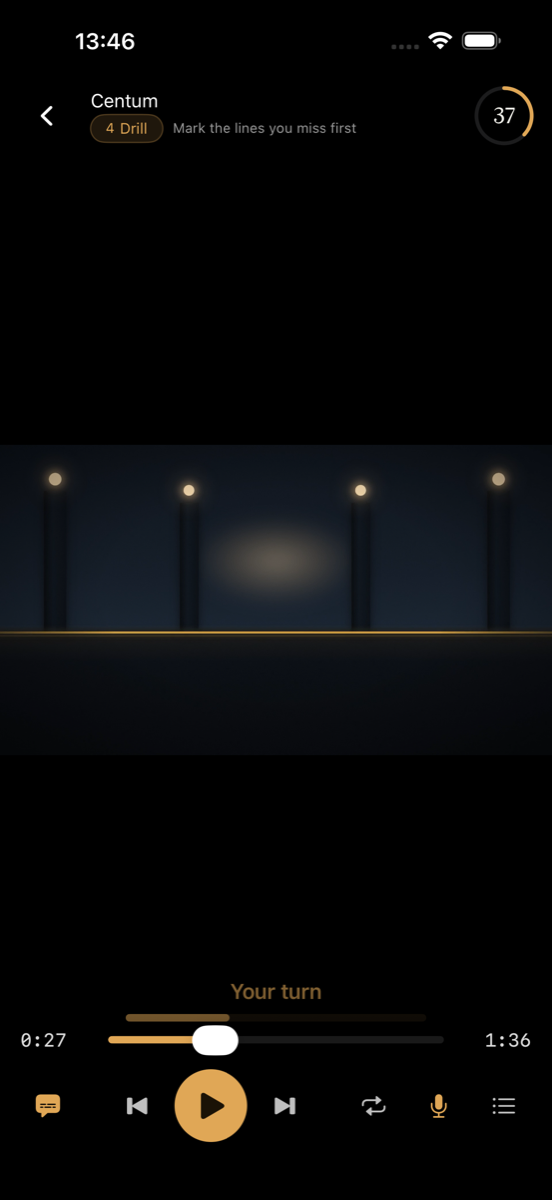
In Centum, use a sentence loop for a small section. Listen for stress, shortened words and pauses. In the recording cycle, compare one feature of your own voice with the original before doing another attempt.
Return before adding more work
At the next session, try to recall a line before looking at it. Replay the scene and check what you remembered. Use your notes to return to a useful expression.
A full-film pass and a short drill serve different purposes. Keep the app’s two records distinct. A growing number shows practice that was recorded; it is not a language exam score.
Take the phrase beyond the film
Use a phrase to form your own sentence about travel, work or a conversation you expect to have. Check that the meaning fits the new situation.
On version 1.0.4 or later, you can use audio-only mode to revisit familiar scenes during a walk or commute, subject to your device’s background-playback restrictions. Keep regular opportunities to speak in your routine, too.